
Camp Management Review for Norwegian Refugee Council

Norwegian Refugee Council asked IRMA to conduct a global review of its camp management programming. The portfolio includes traditional camp management, interventions in urban displacement contexts, and in mobile sites, and spans seventeen countries including Iraq, Afghanistan, Myanmar, Brazil, Greece and others. IRMA’s review enabled NRC to rethink its approach and develop a new camp […]
Evaluation of Value for Money of Start Network Crisis Anticipation Window

IRMA carried out the first evaluation of Start Network’s Anticipation Fund, an innovative Forecast-based Financing mechanism for local and national NGOs to access funds for early action. The evaluation sought to establishing the effectiveness and efficiency of the mechanism, with a focus on ‘Value for Money’. Our team included three national researchers in Somalia, Nigeria […]
Reducing risk in the gold industry in Colombia, for UN Environment
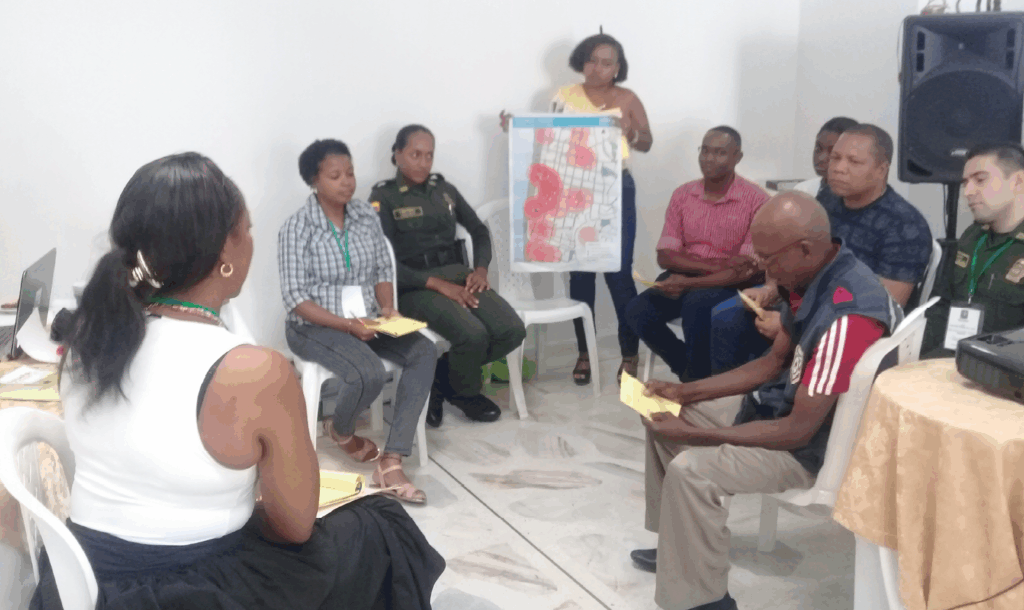
In Quibdo, in the Pacific region of Colombia, informal extraction of gold using mercury, and the chemical processes carried out in the associated jewellery industry, create serious environmental and health risks. UNEP contracted IRMA to produce a case study highlighting the risks of the current practices and potential risk reduction measures that could be applied […]
Gender mainstreaming for African Risk Capacity

The African Risk Capacity (ARC), a Specialized Agency of the African Union, enables African governments to access rapid financing to protect the food security and livelihoods of their vulnerable populations in extreme weather events. ARC engaged IRMA to guide and support the roll-out of its gender mainstreaming strategy. This multi-faceted assignment includes: Designing and delivering […]
Redesign of one of NORCAP’s flagship programs : CashCap

NORCAP is the Norwegian Refugee Council’s global provider of expertise to the humanitarian, development and peace-building sectors. One of NORCAP’s flagship programs is CashCap. Established in 2015/2016, CashCap aims to support humanitarian and development actors in achieving Grand Bargain commitments to radically increase the scale and quality of cash and voucher assistance (CVA) as a modality. How […]
Environmental Considerations in Humanitarian Response Training of Trainers

As part of our continuous technical support to the International Organization for Migration (IOM) in Guatemala, IRMA designed and conducted the first round of a “Training of Trainers” on the incorporation of environmental considerations in humanitarian response to population displacement in Guatemala. Following a positive evaluation of the first round, IRMA conducted a second round […]
Documenting results & lessons from UNDP Tunisia’s DRR capacity-building program at national & local levels
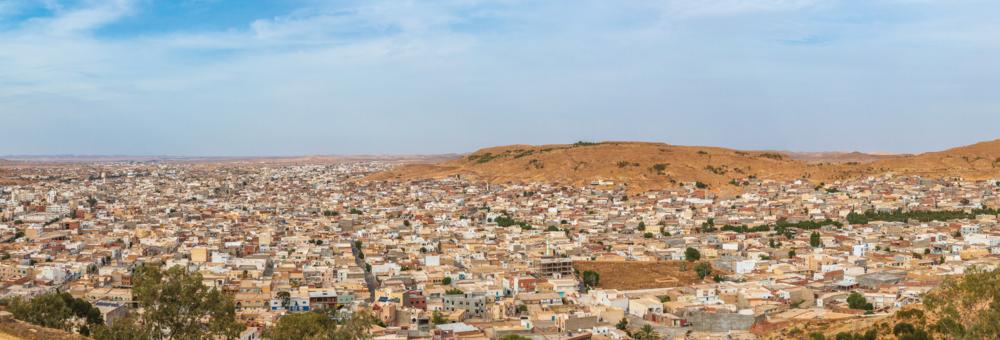
In Tunisia, UNDP has been working with national and local partners to implement the program “Support for strengthening national and local capacities for Disaster Risk Reduction” since 2017. This support has been materialised mainly through two projects, namely: “Improving community resilience and the safety of local communities vulnerable in urban areas in terms of Disaster Risk Reduction, for […]
Providing guidance for pandemic-proof disaster and climate risk reduction within the IFRC

Serving as a DRM leader for the humanitarian and development community for decades, experience has directed the IFRC to anticipate disasters and risks, rather than solely respond. Yet, as for most of the world, COVID-19 took the IFRC by surprise and the delivery of services to communities was slowed. Since, the IFRC Strategy 2030 plans to significantly invest in “epidemic and pandemic preparedness building trust, ownership and […]
IFRC/Swiss Red Cross: building a training programme for Conflict Sensitive Programme

The Local Capacities for Peace (LCPP) Project was formed in the 1990s in order to help aid workers find ways to address human needs in conflict contexts without aggravating conflicts. Within this project, the Do No Harm (DNH) principle was born. Building on DNH, in the early 2000’s, the International Federation of Red Cross and […]
Evaluating the impact of DRR Interventions after disasters

The Oxfam Global Humanitarian Team (GHT) has a Performance and Innovation Team that sets the standards and gathers evidence to document learning in the different thematic areas of Oxfam work, including Disaster Risk Reduction (DRR). Oxfam’s GHT sought IRMA’s support to develop a methodology to evaluate the impact of its DRR work in communities that […]
