
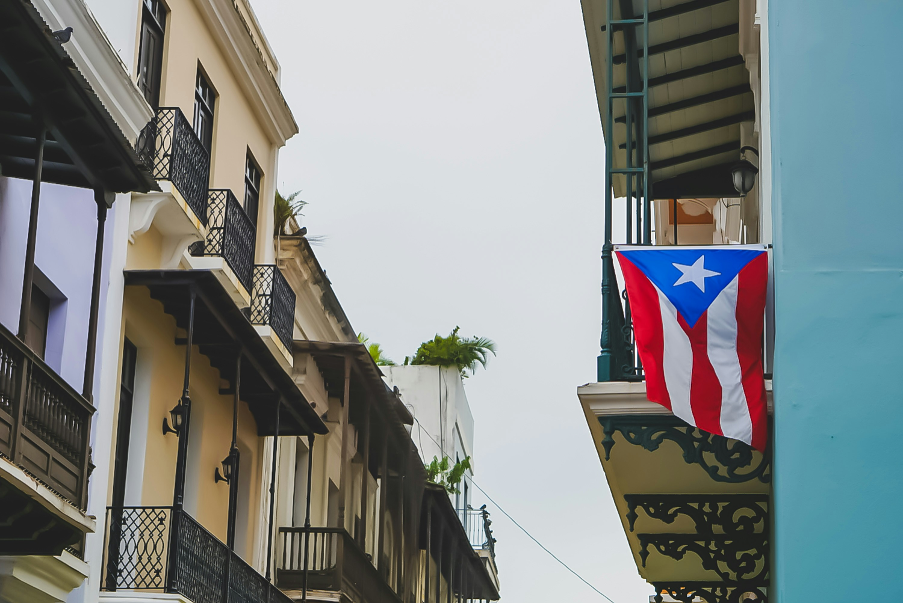
In 2017, Hurricane Maria devastated Puerto Rico, destroying an estimated 300,000 homes and exposing long‑standing inequalities linked to the island’s political status and chronic underinvestment in essential services. In response, Oxfam America launched a program implemented entirely through local civil society organizations, supporting emergency relief, recovery, and longer‑term work on gender justice, disaster risk reduction, climate action, energy justice, economic development, and organisational strengthening. Between 2018 and 2024, Oxfam partnered with more than 20 organisations, many of them women’s rights and social justice organisations, before completing a phased exit from Puerto Rico due to funding constraints and a global strategic refocus.
To capture learning from this experience, Oxfam commissioned Integrated Risk Management Associates (IRMA) to conduct a learning evaluation focused on local humanitarian leadership, partnership practices and feminist principles in the Puerto Rico program. The evaluation was not intended to judge performance or impact, but to generate practical lessons on how Oxfam can act as a better partner to local organisations, especially women’s rights organisations, when supporting crisis response and recovery and when exiting responsibly.
IRMA designed a mixed‑methods evaluation drawing on outcome‑harvesting, process‑focused case studies and contribution analysis, underpinned by a feminist lens. The team began with an inception phase that included seven inception interviews with Oxfam staff, former staff and one partner, stakeholder mapping, reconstruction of a draft theory of change for the entire Puerto Rico program period, and development of an evaluation matrix, tools and workplan. More than 200 documents and materials supplied by Oxfam and partners were reviewed, covering the initial Hurricane Maria response, subsequent emergency responses to COVID‑19, the 2021 earthquake and Hurricane Fiona, as well as longer‑term programming and the exit process.
During the consultation phase, IRMA planned and implemented in‑depth key informant interviews with staff from all partner organisations willing and available to participate, primarily through face‑to‑face meetings in Puerto Rico, complemented by online interviews with Oxfam staff in the United States and elsewhere. A perception survey, tailored separately for partners and Oxfam staff, was used to triangulate findings on the application of Oxfam’s local humanitarian leadership principles, such as partnership quality, gender justice, influencing, capacity sharing and funding practices. The evaluation also envisaged co‑developed case studies that would illustrate how partnership principles played out in practice over the life of the program.
IRMA’s approach included dedicated validation and learning spaces to ensure that emerging insights were interpreted jointly and translated into actionable recommendations. The team proposed an in‑person workshop in Spanish with Puerto Rican partners, as well as a virtual workshop in English for Oxfam staff and any partners able to connect, to review preliminary findings, refine conclusions and co‑create recommendations for future programming and exits. The evaluation’s final outputs were designed to inform Oxfam America’s internal strategies on local humanitarian leadership and feminist partnering, and to contribute learning to the wider humanitarian and development sector.
IRMA’s team for this assignment comprised Marilise Turnbull, Lezlie Morinière and Maricela Perryman.
Photo by Tatiana Rodriguez on Unsplash


